What Your BMI Number Really Tells You
Understanding BMI numbers can be the first step toward a healthy life. But what is the meaning of a number beyond the scale? This blog will help you to understand what your BMI tells you about your lifestyle and health. It’s a half-truth that BMI tells you your body fat, and it’s a famous proverb by Benjamin Franklin
Half a truth is often a great lie
So why not try to understand the complete truth? And why BMI alone does not tell the full story about our health.
To understand the foundation of how BMI is calculated, read our in-depth guide on What is BMI?
Is my BMI healthy?
You cannot say anything about your BMI just after looking at a number on a scale. The results vary for BMI calculation. You need to be sharper to know whether your BMI is healthy or not and make sure there is enough difference between BMI and fat percentage. BMI often misleads because of body composition, but we will find out how to get accurate BMI readings.
Why BMI Can Be Misleading
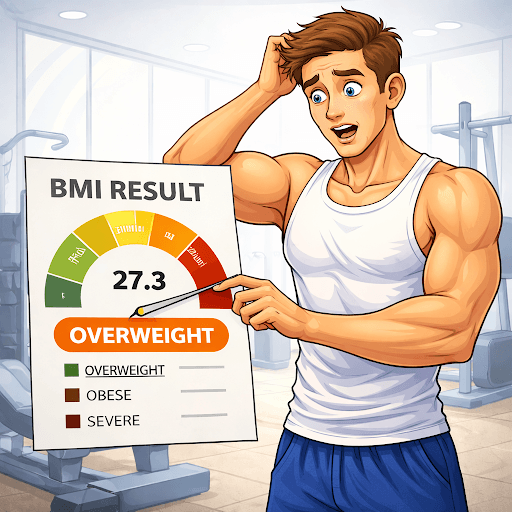
BMI isn’t always the best tool for measuring health. We start exploring why BMI is far beyond the numbers. Most people think BMI is the percentage of body fat, which is a BMI misconception, but as I mentioned above, “A half-truth is often a great lie. BMI can’t differentiate between body fat percentage and muscles.” To understand why BMI can’t differentiate between muscle mass and fat, visit our article, What is BMI?
Find out the mystery about common problems in BMI
High BMI but Not Fat
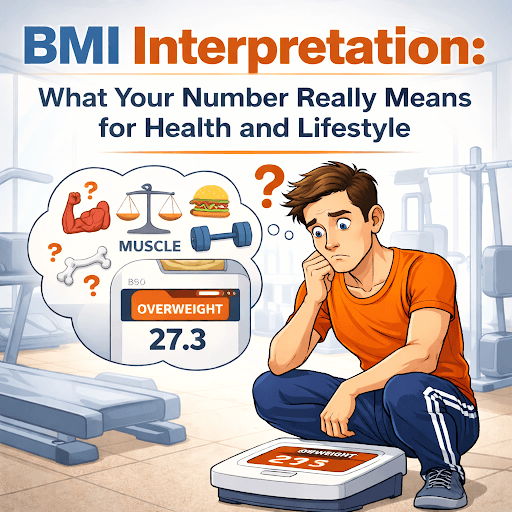
A high BMI doesn’t always mean someone is overweight, especially for athletes or muscular individuals. It is because BMI only calculates your height and weight, so it can’t distinguish between your body fat and muscle mass.
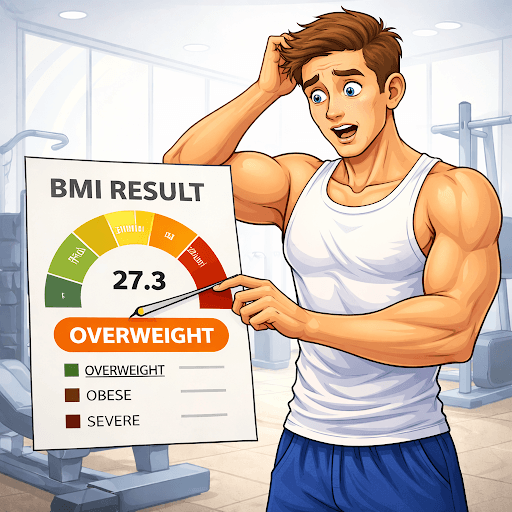
What if you are not muscular or athletic but still face the same problems? Let’s solve this BMI misconception in our next paragraph.
Why do you have a high BMI despite being thin?
If you are skinny yet have a high BMI score, we need to discuss why BMI is misleading. so break down the basics of the BMI tool. It only calculates your body weight and height. If you are skinny, you can still have a high BMI
It means you have fat that is stored around your internal organs. We are going to deal with this scientifically: you come in as a person who does not have muscle but owns fat around the organs, so you don’t look fat but still have a high BMI. Such conditions indicate serious health concerns. A doctor may be helpful. You can also check body fat percentage with other tools.
How Lifestyle Affects BMI
Do you think about how your BMI is related to your lifestyle and how healthy your BMI is? Let’s check the relation between BMI and health risks
Come, discuss some common factors that are directly related to our BMI
Factors
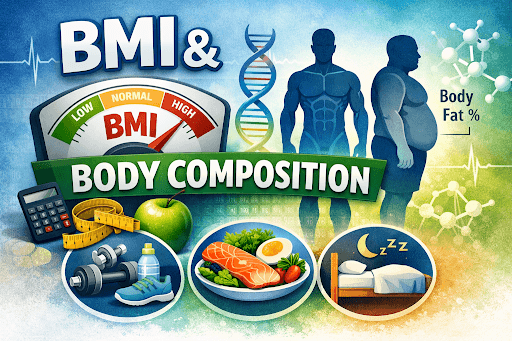
Exercise, Diet, and Sleep
These factors work as a combination. According to science, if you adopt all these, you are going to see a significant improvement in your BMI score.
Exercise keeps you active and helps to measure the calories that burn extra calories and fat
Diet prevents your body from getting extra nutrients that cause fat to accumulate around your body
Sleep is helpful in two ways. First, a sleep of 7-8 hours can burn calories up to 500-600 kcal. How amazing it is, isn’t it?
Secondly, sleep produces hormones named ghrelin and leptin that control hunger.
Stress Impact on BMI
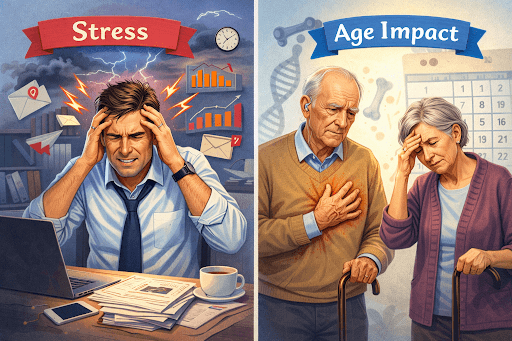
Let’s discuss how stress and age impact the cause behind distorted BMI scores and change the way we imagine diving deep into actual BMI-causing factors
Hormonal changes: stress changes hormonal activities. Your body releases the hormones that increase hunger and create curiosity to eat high-sugar foods, which increases fat.
Behavior change, according to science, is when you feel stressed and start to eat more than usual, lack sleep, and all these are factors we discussed above
Age impact on BMI
Impact of Age on BMI
| Age Group | Average BMI | Factors Affecting BMI | Why BMI Changes with Age |
|---|---|---|---|
| 18-24 Years | 22.0 – 24.9 | Higher metabolism, active lifestyle | In this age group, metabolism is at its peak, and most individuals are physically active. As a result, they typically maintain a healthy weight and have a lower BMI. |
| 25-34 Years | 23.0 – 26.5 | Stable lifestyle, beginning of muscle loss | While metabolism is still relatively high, muscle mass may begin to decrease as individuals settle into a more routine lifestyle, leading to a slight increase in BMI. |
| 35-44 Years | 24.5 – 28.0 | Increased body fat, sedentary habits | Hormonal changes and a more sedentary lifestyle contribute to an increase in body fat, leading to a higher BMI in this age group. |
| 45-54 Years | 25.0 – 29.0 | Muscle loss, slower metabolism, weight gain | With age, muscle mass naturally decreases, and metabolism slows down, making it easier to gain weight and leading to a higher BMI. |
| 55-64 Years | 26.0 – 30.0 | Reduced physical activity, hormonal changes | Physical activity tends to decrease, and hormonal changes, particularly in women, can contribute to increased fat retention and a higher BMI. |
| 65+ Years | 26.5 – 31.0 | Decreased muscle mass, more sedentary, health issues | As muscle mass decreases with age and many individuals become more sedentary due to health issues, BMI tends to increase due to the accumulation of fat tissue. |
Body Fat vs. BMI
We need to close the discussion on serious questions. Can we use BMI to measure body fat?
The straightforward answer is NO, you can’t rely on BMI to measure body fat. BMI does not make a difference in your body fat and muscle mass. But it is a good tool for basic health indicators.
Body fat is measured by some other tools, and it is also a little bit of a complex procedure.

Chubby vs Healthy Weight
You wake up and measure your weight and find it’s a little bit more than yesterday. Oh, shit, if I am chubby, people will make fun of me. Well, stop there. Being heavier than others does not mean that you are fat. Why not find out the line between a healthy weight and when you are carrying an extra burden?
Body composition is a factor that everyone does not have the same body composition. Your body accommodates weight according to your composition. You will see some guys who are skinnier than you but still fall sick more than you.
So now here’s the major question: how will we describe a chubby Guy?
And here’s the game changer known as the BMI Calculator that comes with the ground. Now you raised a question. Well, on one side you tell us that BMI results vary, and on the other hand you recommend us to use the BMI Calculator. Wait, here is the twist.
We can use BMI, but correctly. Here, this content can help you and guide you through the steps to measure BMI correctly

Practicle example to understand clearly
Case Study of a Professional Swimmer vs the Sedentary Person
Alex is a 6-foot-tall professional swimmer who weighs 200 pounds. His BMI score is 27.1 (overweight). But he is a muscular person, having a body fat of just 12%, which is considered healthy for an athlete. But BMI cannot make a difference between body fat and muscle.
Now Jimmy’s height is 5.4, and he is an office worker weighing 180 pounds, which results in a 31.1 BMI. He spends all day sitting around and has a lot of fat, so in this case, BMI measures the BMI in obese, and he does not have muscle mass, so of course, he is in the danger zone and needs to work on himself.
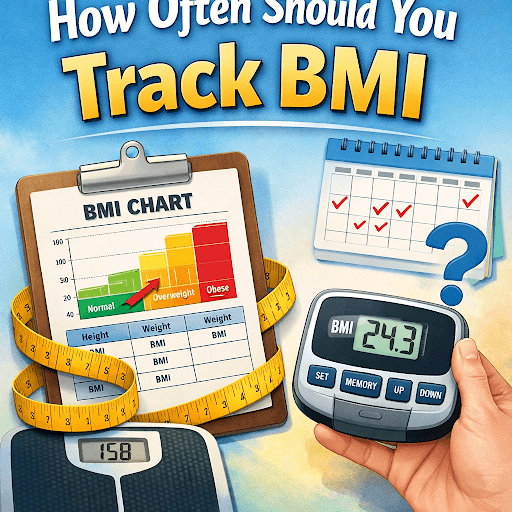
How Often Should You Track BMI
Should need to discuss the key to monitoring our health without overdoing it. If you are not focusing on changing your BMI number, you can roughly check after every 6 months, but if you are a person who is continuously working on your BMI, you should keep track of your BMI once a week
You can also learn here how to calculate BMI for Children, Adults, and Ethnic Groups Differently.
How would I measure my BMI?
I would like to say that your BMI can vary across different perspectives. For more on calculating and understanding your BMI, read our comprehensive guide, How to Calculate BMI. We discuss some common and ignored factors affecting your BMI numbers. If you want additional information about BMI, you can visit the BMI Basic Guide.
If you’re wondering how exactly to calculate your BMI, check out our detailed article on How to Calculate BMI
And here you can learn how to calculate BMI manually on your own.
Conclusion
Now that you have a better understanding of BMI limitations and working patterns. You are set to start a healthy life, and to improve your BMI, take our first step toward a healthy lifestyle. You can try our BMI calculator to track your life in a positive direction. Furthermore, you need to understand where you are standing today to take a step closer to a happy, healthy journey.
You can also get here the latest updates on BMI that’s get you updated.

FAQs: Answers to Some Mostly Asked Questions
1. Why is my BMI high, but I’m not fat?
The reason behind a high BMI and you not being fat may be that you get fat around internal organs.
2. Can BMI alone determine health risk?
The answer is simple: no, it is a basic tool for basic Guide
3. What is BMI?
BMI means body mass index. It measures the body mass and works as a basic health tool.
4. What is the formula for BMI?
This formula is as follows: BMI = height (m)² weight (kg)
5. Can BMI accurately measure Health Risks?
The answer is NO. BMI cannot measure exact health risk, but it is helpful to give basic hints. For better understanding, visit the BMI function and how it works.
6. Is BMI the only way to measure health?
NO, it is just a basic tool to measure health at a basic level.
7. What BMI score is considered healthy?
A BMI score between 18.5 and 24.99 is considered a healthy BMI scorea
8. How can I improve my BMI score?
Don’t worry, you can read our blog; we discuss important factors that will help me to improve your BMI score.
9. Can BMI change over time?
YES, BMI does not remain the same; it changes over time, and it’s normal.
10. Is BMI different for children and Adults?
Yes bmi is different due to their muscle strength.
11. How can I maintain a healthy BMI?
You need to be active and get full sleep. For more details, you should try to read our blog
12. Can a person with a normal BMI still be unhealthy?
Yes, it’s possible. A normal BMI doesn’t guarantee good health. Factors like poor diet, lack of exercise, smoking, or excessive alcohol consumption can still lead to health problems.